50+ Mobile App Ideas You Can Actually Launch in 2026

Turning a mobile app concept into reality requires more than just a great idea. Most app concepts never reach users because creators struggle to bridge the gap between inspiration and execution, lacking the technical knowledge or resources to move forward.
Success depends on understanding market validation, development approaches, and technical considerations that separate thriving apps from abandoned projects. Partnering with a skilled web app development company can transform concepts into functional software, allowing creators to focus on refining their vision and connecting with users.
Table of Contents
- Why Most Mobile App Ideas Never Become Real Businesses
- What Makes a Mobile App Idea Worth Building?
- 50 Mobile App Ideas Entrepreneurs Can Build Today
- Why Great Ideas Still Fail After Launch
- How to Validate a Mobile App Idea Before Investing Heavily
- How Polsia Helps Founders Turn Mobile App Ideas Into Real Businesses
- Start or Grow your Existing Business with Polsia Today
Summary
- Mobile app concepts rarely fail because the idea isn't good enough. They fail because the operational gap between concept and launch overwhelms solo founders who lack technical teams, marketing resources, and the coordination capacity to ship while working full-time jobs. According to LinkedIn's analysis of app failures, 90% of apps fail within the first year, often because founders spend too long planning and too little time learning from real users. Over-preparation often leads to building something nobody wants, since market feedback comes only after launch, not during the planning phase.
- Strong mobile app ideas solve existing problems for specific audiences rather than creating new needs or targeting everyone. TechTrappers found that 90% of apps are abandoned after just one use, most often because the app solves a problem users don't actually have or solves it in a way that requires more effort than the original struggle. Narrow targeting creates a sharper problem definition, which makes validation faster, iteration smarter, and communication more effective than generic positioning that competes with thousands of alternatives.
- Distribution and retention determine success far more than product quality. Google Play Store generated over 140 billion downloads in 2024, while the Apple App Store added roughly 35 billion more, creating a discovery environment where quality without visibility is just expensive code sitting on a server. UXCam's 2024 research found that mobile apps lose approximately 77% of daily active users within the first three days after installation, meaning onboarding friction at the exact moment trust is lowest kills retention before the product can demonstrate value.
- Validation requires measuring user commitment through behavior rather than collecting compliments through surveys. CB Insights reports that 42% of startups fail due to a lack of market need rather than poor execution, making pre-development demand testing essential. Localytics found that 70% of app users abandon an app after one use, which means initial interest through waitlists or email signups reveals far more than survey responses about whether people care enough to change their behavior and integrate a new tool into their routine.
- The traditional path from mobile app concept to sustainable business requires assembling developers, designers, marketers, and support staff before testing whether anyone wants what you're building. Henry's Best Hits reports that over 6,000 companies have now been launched by solo founders using AI systems to replace traditional hiring, proving that the team-first model, where progress depends on coordinating specialists across recruitment, equity negotiations, and meeting schedules, is no longer the only viable path to execution.
- A web app development company like Polsia handles development, deployment, marketing, customer communication, and operational workflows simultaneously, allowing solo founders to test assumptions in days rather than months without coordinating with technical teams or managing handoffs across specialized roles.
Why Most Mobile App Ideas Never Become Real Businesses
The problem is not the idea. Most people never finish or release their projects. They create wireframes, research competitors, and improve features while waiting for certainty that never comes. Building an app requires design decisions, technical infrastructure, user testing, marketing work, and customer support. For someone working nights and weekends around a full-time job, those responsibilities pile up faster than progress happens.
🔑 Key Takeaway: The gap between having an app idea and launching a successful business isn't about creativity—it's about execution capacity and sustained effort over time.
"Building an app requires design decisions, technical infrastructure, user testing, marketing work, and customer support—responsibilities that pile up faster than progress happens for part-time developers." — Development Reality Check
⚠️ Warning: Perfectionism and waiting for complete certainty are the #1 killers of mobile app projects. Ship early and iterate based on real user feedback.

The execution gap nobody talks about
Most founders wait for a technical co-founder or enough savings to hire developers before starting. This waiting period kills momentum. Months pass, motivation fades, and the concept that felt urgent in January feels stale by summer.
Why do most mobile apps fail so quickly?
According to LinkedIn's analysis of app failures, 90% of apps fail within the first year because founders spend too long planning and insufficient time learning from real users. Excessive planning often results in building something nobody wants. Market feedback only emerges after launch.
What makes traditional development so difficult?
The traditional path requires assembling resources before execution: finding a developer, negotiating equity, and coordinating schedules. Each dependency adds friction that kills projects dependent on spare-time energy.
How can platforms change the execution dynamic?
Platforms like a web app development company automate this work. With Polsia, founders move from idea to working software while focusing on what only they can do: improving the vision, talking to users, and validating demand.
But perfect execution means nothing if you're building the wrong thing.
Related Reading
What Makes a Mobile App Idea Worth Building?
The best app ideas solve real problems for specific people in ways that existing solutions don't. A worthwhile idea doesn't need to be revolutionary—it needs to address a genuine pain point clearly enough that someone would choose it over doing nothing, and simple enough that you can validate demand before investing months of development time.

🎯 Key Point: Your app idea doesn't need to be the next big thing—it just needs to be better than the current alternatives for a specific audience.
"The most successful apps solve problems that people didn't even realize they had, but once they use the solution, they can't imagine living without it." — Mobile App Development Insights, 2024
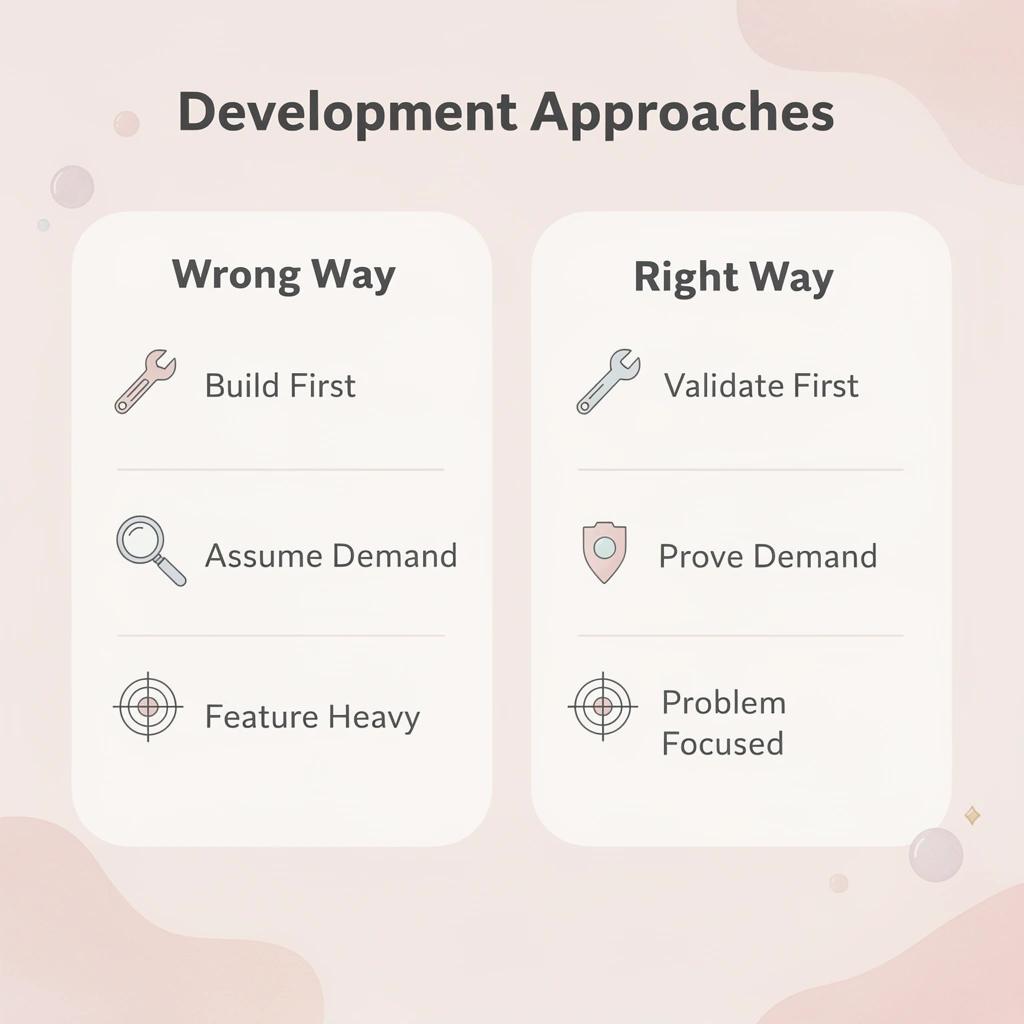
💡 Tip: Focus on validation first, development second. The biggest mistake new app creators make is building something nobody actually wants to use.
It Solves a Problem People Already Have
Strong app ideas solve problems people face regularly, not create new ones. A budgeting app works because managing money is difficult. A meal-planning tool succeeds because deciding what to cook every night drains mental energy. The product simplifies the solution to an existing problem.
According to TechTrappers, 90% of apps are abandoned after one use. Most failures occur because the app solves a problem users don't have or requires more effort than the original struggle. Validation begins by confirming the problem is real, not proving your solution is clever.
It Targets Someone Specific
First-time founders often design for everyone, assuming a wider reach means a bigger opportunity. Generic positioning creates generic products. A fitness app for everyone competes with thousands of others. A running app for people training for their first marathon speaks directly to a specific group with clear concerns and goals.
Narrow audiences have sharper problems, making it easier to build features that matter, validate faster, iterate smarter, and communicate more effectively.
It Can Start Simple
If your idea needs dozens of features before anyone finds it useful, you're not building an MVP. The strongest concepts launch with one core capability that solves one specific problem well. Everything else can wait until real users tell you what they need.
Most founders treat validation as a planning exercise when it's a learning exercise. The market rewards solutions that address real problems for real people and are delivered quickly enough to maintain momentum during design.
But knowing an idea is worth building and getting it into users' hands are two different challenges.
50 Mobile App Ideas Entrepreneurs Can Build Today
The real challenge isn't coming up with a good app idea—it's picking one you can build. Most founders seek the perfect concept when they need permission to start with something small enough to finish this week. The ideas below aren't ranked by potential money or market size. They prioritize how fast you can build them over how original the concept is: a working app that solves one problem beats an amazing idea that never gets started.

🎯 Key Point: The best app idea is the one you can ship quickly, not the most innovative concept that takes months to develop.
"Speed of execution beats perfection of concept when it comes to building your first successful mobile app." — Startup Reality Check, 2024

💡 Tip: Choose an app idea you can build in 1-2 weeks maximum. This forces you to focus on core functionality and avoid feature creep that kills most first-time projects.
Productivity Apps That Solve Daily Friction
1. AI Meeting Notes App
Records conversations, automatically transcribes them, and extracts action items without manual effort. Remote teams waste hours recalling decisions from previous meetings. The MVP requires recording capability, AI-driven summarization, and action item extraction. Revenue comes from free basic versions, with paid premium tiers for users who need higher transcription limits.
2. Accountability App
Pairs users with partners who can see each other's daily completion status. Partner visibility—rather than leaderboards or points—motivates users to complete their habits. Core features include habit creation, daily check-ins, and partner visibility. Premium features unlock group accountability and streak analytics. How can apps help organize and track personal progress?
3. Personal Knowledge Organizer
Captures insights from articles, videos, and conversations, then surfaces them through AI-powered search and spaced repetition. Knowledge workers collect information constantly but rarely revisit it when needed. The system must capture notes from multiple sources, apply smart tagging, and send daily review reminders.
4. Goal-Tracking App with Milestone Rewards
Breaks long-term goals into smaller checkpoints with visual progress indicators. Distant goals lack clarity until you establish intermediate wins. The MVP requires goal creation, milestone breakdown logic, and weekly check-in reminders. Premium templates and team features offer monetization opportunities.
5. Freelancer Client Dashboard
Brings together project status, invoices, communication history, and deadlines in one mobile-first interface. Independent consultants manage multiple clients across email, payment platforms, and project tools. A single dashboard displaying what's due, what's paid, and what needs a response eliminates the need to switch between tasks. The subscription model works because the time saved is measurable.
Finance Apps That Create Immediate Value
Finance apps work best when they solve the money problems users face each month. The most profitable mobile app ideas focus on specific problems rather than attempting to function as comprehensive financial platforms.
6. Subscription Management App
Scans email or bank accounts to find forgotten recurring charges and alerts users before renewal dates. According to Appinventiv's analysis of mobile app business ideas, subscription-tracking apps solve a common problem: people lose track of their monthly charges. The MVP requires subscription detection, organization by service type, and renewal alerts. Revenue streams include freemium tiers and affiliate commissions when users switch to cheaper options.
7. Side Hustle Income Tracker
Separates income and expenses by source, calculates net profit per project, and estimates tax liability in real time. Gig workers and freelancers often discover tax problems too late to address them. Main features include logging income by source and automatic profit calculation, with premium features offering tax export formats and quarterly estimated tax reminders.
8. Budget Coaching App
Combines spending tracking with AI-generated behavioral nudges based on stated financial goals. Traditional budgeting apps fail because they demand discipline without providing motivation. This approach analyzes spending patterns and delivers weekly coaching messages that feel personal rather than automated. The subscription model works when paired with optional access to a human coach for users who need deeper intervention.
9. Invoice Reminder App
Sends professionally worded payment reminders that escalate in tone as invoices age. Late payments damage cash flow, yet freelancers dread chasing them. Automated reminders that progress from friendly to firm eliminate the emotional friction of requesting overdue payments. The MVP requires invoice creation, reminder scheduling based on payment terms, and payment status tracking. Monetization works through per-invoice fees or monthly subscriptions for high-volume users.
10. Micro-Investing Education App
Teaches investing fundamentals through short daily lessons paired with simulated portfolio building using virtual money. Financial literacy apps fail when they lecture; this approach lets users practice with fake money while learning concepts through immediate feedback. The freemium model converts users as they transition from simulation to real investing through brokerage referrals.
Health and Wellness Apps That Lower Barriers
11. Personalized Walking Coach
Creates daily step goals that progressively increase and provides audio coaching during walks. It targets sedentary adults who find gyms intimidating or running inaccessible. The basic version must track steps, adjust goals based on completion rates, and deliver encouraging audio guidance. The company monetizes through premium features and fitness watch integrations.
12. Nutrition Accountability App
Uses photo-based food logging with AI calorie estimation instead of manual entry. Manual database searches for every ingredient discourage users from tracking consistently. Taking a photo and receiving an instant estimate removes that friction. Weekly eating pattern summaries help users identify their habits without judgment. Premium tiers unlock dietitian access for users seeking professional guidance.
13. Sleep Optimization Tracker
Connects daily habits, such as caffeine intake and screen time, with sleep quality ratings to identify your personal patterns. The system records habits throughout the day, collects a sleep quality rating each morning, and generates a two-week summary showing which behaviors affect your sleep. Freemium works when personalized optimization plans require premium access.
14. Mental Wellness Journal
Provides AI-generated daily prompts tailored to your recent entries and tracks emotional patterns over time. Guided prompts referencing previous entries create continuity and transform journaling into a conversation, helping overcome blank-page anxiety. Monthly pattern summaries reveal emotional trends you might miss day-to-day. Subscription revenue funds the integration of therapist referrals for users seeking professional support.
15. Fitness Challenge Platform
Let users create or join time-limited fitness challenges with shared leaderboards and group accountability. The MVP requires challenge creation, activity logging through device integrations, and real-time leaderboards. The freemium model converts through premium challenge customization and corporate licensing for team-based wellness initiatives.
Local and Community Apps That Connect People
16. The Neighborhood Recommendation App
Collects suggestions from residents, organized by neighborhood and category. Verification prevents spam while maintaining authenticity. The basic version requires neighborhood profiles, the ability to submit recommendations with simple checking, and category browsing. Partnerships with local businesses and featured listings generate revenue without compromising the community-driven focus.
17. Local Event Discovery App
Aggregates events from multiple sources. Users can RSVP to events with a single tap and add them to their calendar. The system requires event organizers to submit events and allows users to filter by interests and date. Users can also export events to their calendar. The app generates revenue through promotion fees charged to organizers and a percentage of ticket sales, keeping the platform free for regular users.
18. Community Marketplace
Creates a verified local buy-sell-trade platform with identity verification and in-app payment. Local transactions currently occur through unstructured channels lacking trust mechanisms. Neighborhood-level verification and integrated payment reduce fraud while maintaining convenience. Transaction fees and premium listing options generate revenue while keeping basic listings free.
19. Parent Resource Network
Builds a verified neighborhood community where parents share recommendations and access a curated directory of local resources. Parents need trusted advice about pediatricians, daycares, and activities from people in their specific area. The MVP requires parent verification, a community feed for questions and recommendations, and a searchable resource directory. Local business partnerships and premium referral fees generate revenue without charging parents directly.
20. Local Business Loyalty App
Provides independent merchants with a shared loyalty platform where customers earn rewards across participating neighborhood businesses. Small business owners cannot afford individual loyalty systems, and customers don't want separate punch cards for every shop. Merchant subscription fees support the platform while customers use it for free. The MVP requires business registration, QR code scanning for point tracking, and reward redemption across participating locations.
AI-Powered Apps That Automate Cognitive Work
Most founders building AI-powered apps assume they need to hire developers, work out equity splits, and coordinate technical teams before shipping anything. Platforms like Polsia let solo founders ship functional AI apps by handling technical execution while you focus on defining user problems and testing solutions.
21. AI Study Assistant
Turns uploaded notes and textbooks into flashcards, practice questions, and spaced repetition schedules. Students spend hours creating study materials when the content already exists in their notes. The system requires document upload, AI content generation for multiple question types, and spaced repetition scheduling. Freemium users convert when they hit upload limits or seek advanced question formats.
22. AI Content Repurposing App
Automatically generates captions, email copy, and short-form scripts optimized for different platforms from a single piece of long-form content. Solo creators and small marketing teams often struggle to adapt their best content across multiple channels. The MVP requires content input, AI-generated output AI at least three formats, and one-tap copy functionality. Subscription tiers based on monthly volume limits create predictable revenue.
23. AI Travel Planner
Creates personalized day-by-day plans from simple preference inputs and adjusts them based on budget and travel style. Independent travelers spend hours researching destinations when they need a good plan. The system requires preference input forms, AI itinerary generation with daily schedules, and map integration. Booking affiliate commissions and premium offline access generate revenue.
24. AI Sales Assistant
Draft personalized follow-up emails, generate prospect research summaries, and suggest next steps based on pipeline stage. Freelancers and small business owners handle their own outreach but lack the time to personalize every interaction. The MVP requires contact logging, conversation notes, and AI email drafting with edit capability. Subscription pricing with CRM integration creates recurring revenue.
25. AI Customer Support Companion
Trains on a small business's product information and handles inbound customer messages, escalating complex issues to humans. Solo operators and e-commerce sellers spend hours answering repetitive questions that could be automated. The system requires knowledge-base input, AI response generation, and escalation flagging when confidence falls below a threshold. Monthly subscription pricing scales with message volume.
Education and Learning Apps That Fit Busy Lives
26. Language Exchange Partner App
Matches language learners with native speakers for structured conversation exchanges using AI-generated prompts and session feedback. Adult learners plateau after beginner apps because they need conversational practice with real people. Structured exchanges with prompts eliminate the awkwardness of unguided conversation. The MVP requires language profiles, partner matching based on learning goals, and session scheduling. Freemium converts through premium matching filters and unlimited session access.
27. Micro-Skill Learning App
Delivers professional skill development through five to ten-minute daily lessons with practical exercises. Busy professionals cannot commit to hour-long courses; micro-lessons that fit between meetings remove the time barrier. The system requires a lesson library organized by skill track, daily prompts for consistency, progress tracking, and end-of-lesson quizzes. Subscription pricing with premium learning paths creates recurring revenue.
28. Kids Coding App
Teaches coding basics through story-driven projects using a visual block-based system designed for touchscreen use. Desktop-focused tools don't function on the devices kids use daily. Touchscreen-native visual coding removes this barrier. The MVP requires a visual code block interface, starter projects with narrative context, and a parent progress dashboard. Family subscription pricing works because parents invest in educational tools that demonstrably teach skills.
Real Estate and Housing Apps That Clarify Decisions
29. The Rental Affordability Calculator
Determines the true cost of housing by including utilities, commuting, and time value, then compares them against take-home income. Young professionals often compare rent prices without considering hidden costs that determine affordability.
The MVP needs income input, a detailed cost breakdown by category, and side-by-side comparison views. Referral partnerships with moving services and insurance providers generate revenue without charging users.
30. Roommate Matching App
Uses a structured compatibility questionnaire with identity verification to match potential roommates before they meet. Students and young professionals relocating to new cities need housing quickly but lack established social networks to find compatible roommates.
The MVP requires a compatibility questionnaire, match scoring with explanations, and basic messaging. Premium matching and background-check partnerships generate revenue.
Pet and Animal Apps That Reduce Stress
31. Pet Health Tracker
Consolidates vaccination records, medication schedules, and vet visit history in one place with reminders and a shareable health summary. Pet owners currently juggle paper records and calendar reminders across multiple systems. Centralized tracking with automatic reminders prevents missed medications and streamlines vet visits. The basic version requires pet profiles, health record logging, and medication reminders. A freemium model can convert users by adding multi-pet management and telehealth integration.
32. Dog Walker Coordination App
Manages walk scheduling, pet care instructions, GPS tracking, completion photos, and payments in one place. Urban dog owners who use professional walkers currently coordinate via text messages and payment apps, without clear records. Integrated scheduling with walk confirmation and payment eliminates coordination overhead. Transaction fees and premium subscription tiers create dual revenue streams.
Travel and Hospitality Apps That Serve Specific Needs
33. Slow Travel Planner
Helps slow travelers find long-term accommodation and create meaningful local schedules for stays of one week or longer. Booking platforms cater to short stays, leaving remote workers and experience-seeking travelers without suitable options. The basic version requires destination browsing, extended-stay accommodation search, and a local activity feed organized for longer visits. Accommodation affiliate partnerships provide revenue opportunities.
34. Airport Layover Guide
Provides real-time guides for major airports, covering lounges, restaurants, rest facilities, and city excursion options for long layovers. The MVP requires detailed airport profiles for the 50 busiest hubs and a layover-time calculator that suggests activities based on available time. Lounge affiliate partnerships and premium offline guides generate revenue.
Social and Relationship Apps That Maintain Connections
35. Intentional Friendship App
Sends timely reminders to reach out to important contacts with personalized conversation starters. Adults whose friendships have weakened over time struggle to maintain them without automated prompts. The basic version includes contact prioritization, connection goals for each person, and weekly outreach reminders. Subscription pricing with premium relationship insights converts users seeking deeper analytics.
36. Group Trip Planner
Brings together destination voting, itinerary building, shared expense tracking, and group communication in one place. Friend groups and families planning trips together currently juggle multiple tools, losing information in the process. Planning everything in one place with built-in expense splitting streamlines coordination. Booking affiliate commissions and premium trip management features offer revenue opportunities.
Environment and Sustainability Apps That Enable Action
37. Personal Carbon Tracker
Calculates your personal carbon footprint based on transportation, diet, and consumption, then ranks reduction strategies by impact. Environmentally conscious people want measurable action, but often lack clarity on which changes matter most. Impact-ranked suggestions help them prioritize what works best. The basic version requires lifestyle inputs across four categories, a carbon score calculation, and ranked reduction suggestions with impact estimates. Offset purchasing and corporate licensing can create revenue opportunities.
38. Food Waste Reduction App
Tracks pantry items with expiration dates and suggests recipes using ingredients nearing their use-by date. Budget-conscious and environmentally motivated households waste food when they forget what they have. The MVP requires pantry logging, expiration alerts, and recipe suggestions based on available ingredients. Grocery partnerships and premium meal planning features generate revenue for the platform.
Creator Economy Apps That Support Independence
39. Newsletter Growth Tracker
Brings together subscriber growth and engagement metrics from connected newsletter platforms into a mobile-first daily dashboard. It provides combined views with benchmark access, helping independent creators understand their performance across multiple platforms. Subscription pricing with sponsor marketplace integration creates ongoing revenue while supporting creator monetization.
40. Podcast Production Assistant
Handles episode planning, guest coordination, AI-generated show notes, and publication scheduling in one mobile-first system. Unified production management with automated show notes eliminates the need for multiple tools. Subscription pricing, along with premium AI features and guest CRM functionality, enables monetization.
Senior and Accessibility Apps That Serve Underserved Needs
41. Medication Management App for Seniors
Provides large-text medication reminders with photo confirmation and a caregiver visibility dashboard featuring automatic refill alerts. Adults over 65 and their adult children worry about missed medications but lack simple tracking tools. Family subscription pricing and pharmacy partnerships sustain the platform.
42. Senior Social Connection App
Offers a simplified video-calling and messaging interface, along with a curated virtual event calendar for older adults. Adults over 70 and their families find standard apps too complex. Family subscription pricing and care facility licensing provide revenue streams.
Professional Development Apps That Accelerate Careers
43. Interview Preparation Coach
Creates practice questions based on a job description, records your spoken answers, and provides AI feedback on clarity and pacing. Job seekers lack feedback when practicing alone. The freemium model converts customers through premium question banks and access to human mock interviews.
44. Professional Portfolio Builder
Let's professionals create mobile-friendly shareable portfolios in minutes using field-specific templates. Creative freelancers and early-career professionals need portfolios but lack design skills. The freemium model converts customers by offering access to a custom domain and analytics.
Home and Family Apps That Reduce Mental Load
45. Home Maintenance Scheduler
Creates a personalized maintenance calendar based on home characteristics and sends seasonal reminders for each task with a completion log. First-time homeowners and busy families often neglect maintenance until something breaks; automated seasonal reminders with task-specific guidance prevent costly repairs. Freemium converts through contractor referral integration and expanded task libraries.
46. Family Chore Management App
Lets parents assign chores to children with photo completion confirmation, streak tracking, and allowance management. Photo confirmation and streak tracking gamify the process while teaching responsibility. Family subscription pricing with bank integration provides monetization.
Safety and Emergency Apps That Provide Peace of Mind
47. Personal Safety Check-In App
Sends automated check-in prompts and alerts emergency contacts if no response arrives within a set timeframe. Solo travelers, hikers, and runners benefit from this safety layer without manual check-ins. The freemium model converts through unlimited contacts and extended customization options.
48. Neighborhood Safety Alert App
Delivers verified local safety alerts from official sources and community-reported incidents organized by proximity. Homeowners, parents, and urban residents receive timely safety information without having to sift through unverified social media posts. Law enforcement partnerships and premium alert customization generate revenue.
Niche and Emerging Apps That Serve Specific Markets
49. Second-Hand Luxury Authenticator
Uses AI visual analysis to verify luxury items from photos, with human expert review available upon request. The app serves buyers and sellers in the secondhand luxury market who need authentication before transactions. Revenue comes from per-check fees and subscriptions for frequent traders.
50. The Micro-Volunteering App
Connects people with limited free time to volunteering opportunities lasting one to three hours. Professionals, students, and companies seeking to help their communities often lack the capacity to maintain regular schedules. The app solves this by offering short volunteering opportunities available with a single tap. It generates revenue through nonprofit subscription fees and impact-tracking features.
Launching any of these ideas only matters if people use what you build.
Why Great Ideas Still Fail After Launch
Making the product is the easy part. What kills most mobile apps is everything that happens after launch. You're no longer competing on features alone: you're fighting for attention in a market where users have millions of other choices, less patience, and won't accept anything hard to use.

🎯 Key Point: The real challenge begins when your app hits the app store. Post-launch execution determines whether your great idea survives or joins the graveyard of failed apps.
"90% of mobile apps are deleted after just one use, and only 25% of users return to an app after the first day." — Localytics Mobile App Report, 2023

⚠️ Warning: Even apps with revolutionary features can fail within weeks if they don't nail the user experience, onboarding process, and market positioning from day one.
The Distribution Problem Nobody Solves
Building an app doesn't guarantee people will find it. Google Play Store generated over 140 billion downloads in 2024, while the Apple App Store added roughly 35 billion more, according to SQ Magazine's mobile growth analysis. Both platforms host millions of active apps, and your product competes directly with established alternatives for user attention.
Most founders spend three months refining features and three days thinking about distribution. They launch without acquisition channels, content strategies, or partnerships, assuming quality products naturally attract users. Quality without visibility is expensive code sitting on a server.
Why do most apps lose users within 72 hours?
Getting someone to download your app is step one. Convincing them to stay is where most fail. UXCam's 2024 research found that mobile apps lose about 77% of daily active users within the first three days after installation. Users open the app, become confused or encounter a delayed value, and never return.
What creates the gap between expectation and experience?
The problem isn't always the product—it's the gap between what people expect and what they experience. A meal-planning app that requires 20 minutes of data entry before showing a recipe loses users who expected immediate results. A habit tracker that demands account creation, surveys, and notification permissions before demonstrating its value creates friction when trust is at its lowest.
Why does user retention matter more than acquisition
Getting users doesn't matter if they leave. Most apps lose the majority of their users within 30 days. Every departing customer must be replaced, making user acquisition expensive. You're not growing; you're filling a bucket with a hole in it.
What makes traditional team building so expensive
The traditional approach requires hiring specialists for each function: a developer to fix bugs, a marketer to run ads, a support person to answer tickets, a designer to improve onboarding, and a product manager to prioritize features. Each hire takes weeks to find, negotiate, and onboard, slowing your progress while you build the team.
How do modern platforms solve operational complexity
Platforms like Polsia handle these operational layers simultaneously. Code ships, ads run, customers get responses, and content goes live without coordinating schedules or managing handoffs. What once required assembling a team now runs autonomously, letting you focus on decisions only a founder can make.
But even perfect execution won't save you if the idea itself can't survive contact with real users.
Related Reading
- Softr Alternatives
- Replit Alternatives
- Mobile App Ideas
- Appsheet Alternatives
- Devin Ai
- Ai Tools For Product Managers
How to Validate a Mobile App Idea Before Investing Heavily
Validation happens through what users do, not what they say. You need proof that people will use what you're building before investing significant resources. The goal is to replace guesses with real evidence before spending months building something nobody wants.
💡 Key Insight: Don't rely on what people say they'll do—focus on their actual behavior and willingness to pay.

"42% of startups fail because there is no market need." — CB Insights
According to CB Insights, 42% of startups fail due to no market need. Validation reduces this risk by testing whether people want your product before development begins.

⚠️ Warning: Building first and validating later is the fastest way to waste months of work and thousands of dollars.
Start with the problem, not the solution
Most founders describe their app idea by listing features: "It's a productivity tool with AI scheduling and task automation." That's a solution. The problem matters first. Who struggles with what, and how often does that struggle interrupt their day?
If you can't explain the specific frustration your app addresses, you lack clarity to validate anything. The sharper the problem definition, the easier it becomes to find people experiencing it and measure whether they care enough to change their behavior.
Measure commitment, not compliments
Waitlists, email signups, and pre-orders reveal more than survey responses. People say they would use a product, but far fewer download it and even fewer keep using it. Localytics found that 70% of app users stop using an app after one use. Initial interest matters far less than sustained engagement.
Ask potential users to do something that requires time or attention: join a waitlist, schedule a call, or share the idea with someone else facing the same problem. Those who follow through demonstrate real demand. Those who say "great idea" and disappear are being polite.
Build the smallest version that proves the core assumption
Most founders build too much for their first version, delaying learning and wasting resources. Instead, identify the single assumption your entire business depends on, then build only what's needed to test it.
What does testing core assumptions actually look like?
If you're creating a meal planning app, the basic assumption is that people will follow AI-generated meal plans. You don't need recipe videos, grocery delivery integration, or nutrition tracking to test that. You need meal plans and a way to measure whether people use them.
How can you reduce development time to accelerate testing?
Platforms like Polsia accelerate the path from idea to working product by handling development, deployment, and iteration simultaneously. What once required assembling a technical team and coordinating sprints now runs autonomously, letting you test assumptions in days instead of months.
What do user behaviors reveal about your app's value?
Retention tells you more than any focus group. If people return to your app without prompting, you've found something worth building. If they download it once and never return, no amount of feature expansion will fix that. Usage patterns reveal whether you're solving a real problem or an imagined one.
Which metrics show if your app fits into daily routines?
Track activation rates, session frequency, and task completion. These behaviors reveal whether your app integrates into someone's daily routine or sits unused on their home screen.
But even the best validation process won't matter if you can't move from proof of concept to an actual business without rebuilding your entire operation.
How Polsia Helps Founders Turn Mobile App Ideas Into Real Businesses
Building a mobile app the traditional way requires assembling developers, designers, marketers, support staff, and operational systems before testing whether your product will work in the market. Polsia eliminates this need by serving as an independent AI system that handles execution across planning, development, marketing, customer communication, and operations, allowing you to focus on your vision while it manages everything else.

🎯 Key Point: Traditional app development requires assembling an entire team before you know if your idea will succeed, while Polsia's AI system lets you test and iterate without the upfront investment in human resources.
"Polsia transforms the app development process by eliminating the need for traditional team assembly, allowing founders to focus on vision while AI handles execution."

💡 Tip: Instead of spending months recruiting and managing a development team, you can leverage Polsia's integrated approach to get your mobile app idea to market faster and with significantly lower risk.
Why doesn't conventional hiring work for mobile app development?
People often say you need to hire workers before you can grow your business. Each new hire brings extra work to manage, negotiations about company ownership, and months of searching for the right person. Henry's Best Hits reports that over 6,000 companies have been started by solo founders using AI systems instead of traditional hiring, proving the team-first model is no longer the only path to success. The real problem isn't your ability to manage people—it's the belief that you need them to make progress.
How does AI replace traditional team coordination?
Polsia works like your permanent team, handling jobs that typically require multiple specialists. It writes code for products, sets up computer systems, runs ads, answers customer questions, and manages daily work tasks without requiring coordination or disputes over responsibilities. When you want to test a new feature, it ships immediately. When you need to contact potential users, it starts reaching out. The work continues uninterrupted, not in fragments between meetings and handoffs.
What happens after you launch your app?
Most platforms help you build the product, then leave you to figure out everything else. You launch an app, only to realize you still need to acquire users, build awareness, handle support requests, and maintain infrastructure. The operational burden multiplies after launch. Founders who successfully ship products often struggle more with sustained execution than initial development.
How does Polsia handle ongoing business operations?
Polsia treats business operations as a continuous system rather than separate projects. It runs cold email campaigns to reach potential customers, manages Meta advertising to test different messaging, posts social content to build awareness, and handles customer communication as inquiries arrive. The same system that built your app also markets it, supports it, and makes changes based on real user behavior. You're directing a system that executes your strategy across every channel simultaneously.
Why Execution Matters More Than Resources
The gap between promising ideas and profitable businesses isn't about money or qualifications: it's about testing your assumptions, reaching users, gathering feedback, and improving based on what you learn. Traditional approaches force you to choose between moving slowly with a team or moving alone with limited capacity. Polsia creates a third option: moving quickly with independent execution across every function that matters. The constraint isn't your resources anymore—it's how clearly you can explain what needs to happen next.
But understanding what's possible and starting are two different challenges.
Related Reading
- Lovable Ai
- Best Mobile App Builder
- How To Create An App
- No Code Ai Tools
- Hire an App Developer
- Ai App Builders
- Best Vibe Coding Tools
Start or Grow your Existing Business with Polsia Today
Successful founders execute faster and gather user feedback earlier than those who stall. Most mobile app concepts die in planning mode, waiting for the perfect team or capital. That waiting period kills crucial momentum.

🎯 Key Point: The difference between successful and failed app launches isn't resources—it's execution speed and user validation.
"Most mobile app concepts die in planning mode, waiting for the perfect team or capital." — Polsia Research, 2024

Start with Polsia today for $49 per month. Use your first session to turn an app concept into a launch-ready roadmap. Our AI co-founder can define features, build an MVP, create a go-to-market strategy, and establish operational systems to move from concept to your first users. The constraint isn't resources—it's how clearly you can articulate what needs to happen next.
💡 Tip: Your first Polsia session should focus on defining your MVP features and user validation strategy rather than perfect planning.